Train the people who will run it
Most of my work for research labs and universities comes down to one idea: the install is only finished when the people using it aren’t scared of it. I’ve set up or trained teams at places like the Institute for Safe Autonomy, the Prorok Lab at Cambridge, UCL’s BodyLab, Cerca Magnetics, the NFTS and a long list of other universities and colleges. Those kinds of teams don’t want a black box. They want to understand it well enough to trust the data.
Accuracy, latency and response are all tunable. You just have to be hands-on.
That tuning is most of the job. Marker sizes, filters, camera placement and software settings all change what comes out the other end, and the right answer for a drone lab is different from the right answer for a dance studio. So I work iteratively, with the client in the room, and I’d rather they poke at it and ask awkward questions than nod politely. When they get stuck later, they can call me.
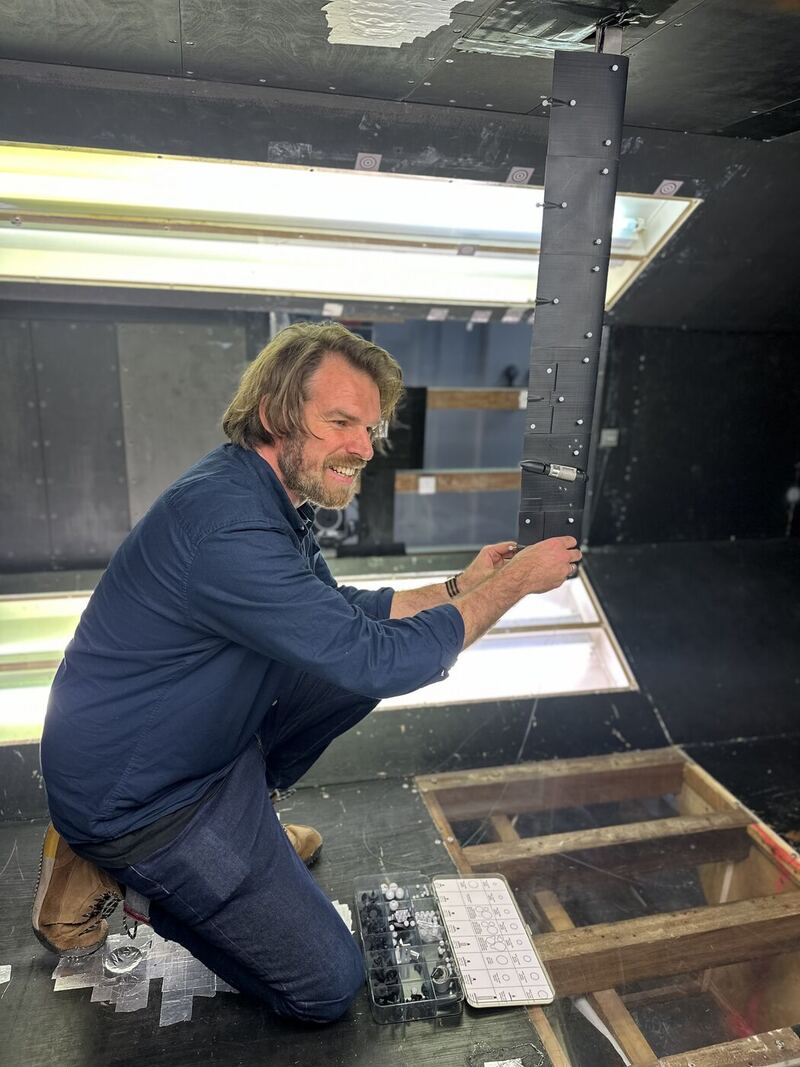
My recent work with Bristol University is a good example. We’ve been validating motion capture data for foldable aircraft wings in wind tunnels. Foldable wings are one way to get more efficient flight, and efficiency is a sustainability story as well as an engineering one. The tracking has to be trustworthy enough that the researchers can build on it, and that means understanding exactly where the system is strong and where it isn’t.
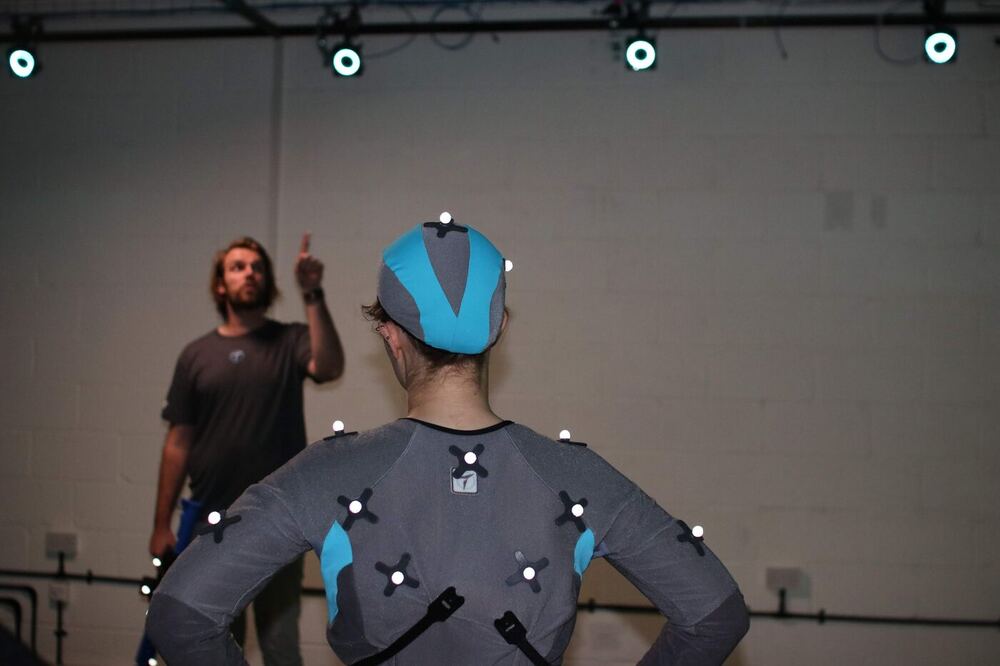
Other projects have had their own hard parts. For the ATOM AR headset ground-truth work, we had to track across two floors with a single volume. For ICTheatre, the budget was small, so the job was getting maximum impact from a modest system. For a clay target shooting concept, I ended up as the original concept designer for the optical tracking and I’m named on the patent. Each one needed the same discipline: be honest about what the technology can do, measure it, and keep the benefit practical.
I’ve now taught or run training at most UK universities and across Europe, Australia and America. If you are planning a lab, a drone arena or a research build, I’m happy to talk it through before you buy anything. Choosing the right system, and the right size of system, is usually where the biggest saving is, in both money and kit that never needs to be made.